
Projects:
Our projects combine historical research methods with digital technology to tell a fuller story of Salem
Christian David, born around 1780, was purchased by the Wachovia Administration in 1805 for about $400 to labor at the distillery in Bethabara. The Church administration moved him to the Wachovia Administration Farm, also called the “Negro Quarter,” in Salem and in 1817 and by 1821 the new Moravian Congregation Administrator, Lewis David von Schweinitz was in charge of him. He was known as “Davy” until he was baptized into the Moravian Church in 1824. He became a sexton of the “Negro Church” (named St. Phillips Church in 1914). Theodore Schulz took over as Administrator after von Schweinitz and was responsible for Christian David for the rest of his life. Schulz had a house built for David in 1835, where we can assume he lived until his death in 1839.
*Thanks to Martha Hartley, Director of Moravian Research at Old Salem Museums and Gardens for sharing her extensive archival research on Christian David.
Christian David Dwelling
The first digital output of Hidden Town in 3D is an AR model of a slave dwelling that no longer stands, which visitors may explore on site using a web-enabled device. This model represents a detailed model of what we think the Christian David House looked like based on archeological findings and comparable slave dwellings. MTSU Public History and Animation students collaborated to create the rendering in 2018.
To read about the scholarship that informed this model, click here.
Christian David’s Objects
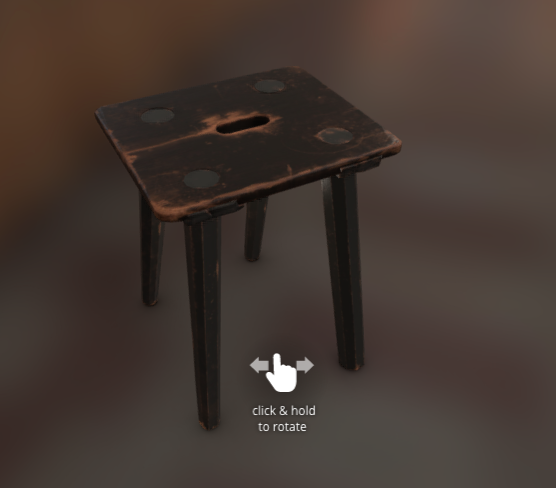
The second digital output of Hidden Town in 3D are AR models of objects that could have been used in Christian David’s dwelling or used as tools. The objects help to humanize David and illustrate the everyday objects he may have had in his possession, whether in his home or while he labored in Salem. Students researched the 18th century objects to assist in the modeling, which visitors can explore using a web-enabled device. To learn more about Christian David’s objects and the scholarship that informed the renderings, click here.
Process and Methodology
Historical Research
Through archival research, students identify architectural features, material culture, and other aspects of dwellings that are no longer extant.
Boots on the Ground Field Work
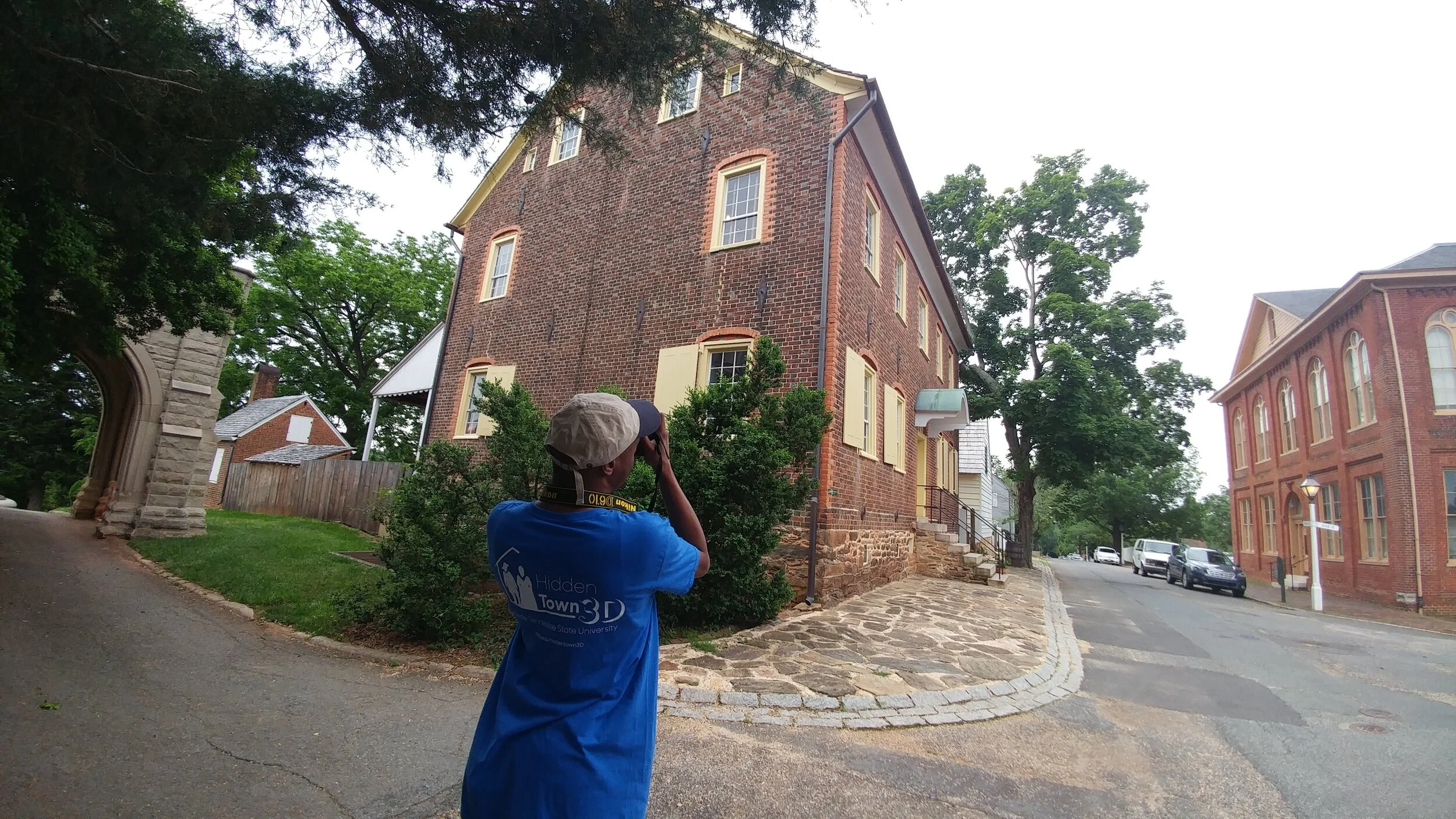
Going outside and into the historic district, extensive photographs are taken to provide context to the historic streetscape of Salem.
Digital Technology
With the research and photographs, animation students are able to render the dwellings of the enslaved and assist visitors in understanding just how entrenched they were in town.